
The Hidden Risks of Using Separate Vendors for IT and CCTV
With the current digital nature of businesses, the fields of security and IT infrastructure cannot be considered separately. They should complement one another to ensure efficiency, security, and cost-effectiveness of operations in companies. Some companies still prefer working with separate IT and CCTV vendors, believing this decision saves money.
However, it is often the opposite, since various problems may become evident only when it is already too late. The decision often leads to hidden inefficiencies and long-term expenses. The risk associated with separate IT and CCTV vendors usually becomes visible only when systems fail, or costs begin to rise unexpectedly.
Understanding the Complications Involved in Using Different Vendors for IT and CCTV Services
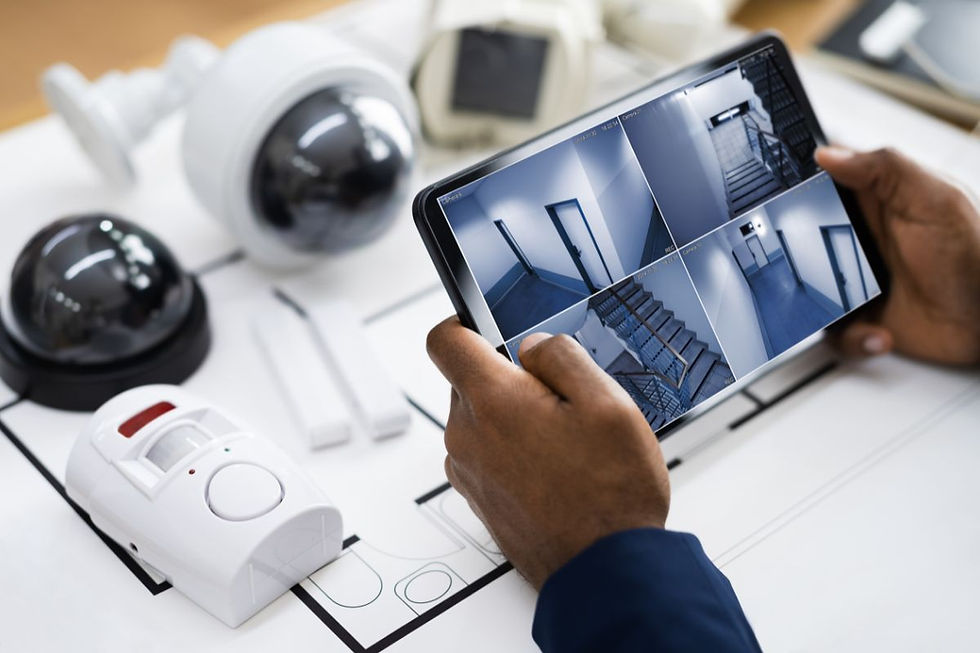
Having two different vendors for IT and CCTV services is a reasonable choice, as one focuses on networking while the other focuses on monitoring. Nevertheless, today's advanced CCTV services do not operate as independent entities; instead, they depend heavily on the underlying IT framework, including networks, storage facilities, cloud connectivity, and cybersecurity measures.
Vizdomtech’s CCTV services use IP cameras, network switches, servers, and video management software- all of which depend on a strong IT backbone. This makes IT and CCTV vendor management more complex when handled separately.
Issues with Using Independent Vendors
Inability to hold anyone accountable for system failure
Disputes arising from unclear responsibilities between the IT and CCTV departments
Problems in coordinating troubleshooting efforts
Greater downtime caused by system outages
Repetitive billing for services covered by maintenance agreements
Hidden Costs of Separate IT & CCTV Vendors
1. Double Maintenance Agreements
Using different vendors means that you will have to pay for:
Maintenance of your IT infrastructure
Maintenance of your CCTV system
Network management for your cameras
Updates for your software and technical support
Both vendors will charge you for all these services separately, even if they overlap, such as network diagnostics.
2. Increased Cost of Repairs and Downtime
Repairing and maintaining CCTV systems can be expensive for companies, costing thousands of dollars each year depending on the system's size and complexity.
In a situation such as this, both the CCTV vendor and IT vendor have their own explanations for what is happening.
They are more interested in protecting themselves rather than helping you fix the problem.
3. IT and CCTV vendor management
Management of several vendors involves:
Individual contract renewal
Multiple contacts
Fragmented SLA management
More overhead
This process is complicated and thus takes a lot of time and effort to manage. The internal team focuses more on managing these vendors rather than concentrating on their main tasks.
4. Difficulties in Integrations and Compatibility
Current surveillance technology depends on integration with:
Cloud computing technology
Data analytics software
Remote monitoring systems
Integration is often challenging when vendors act alone. This can result in isolated data, incomplete features, and low return on investment for technology.
5. Security Threats and Vulnerabilities
No vendor adopts a common security protocol. These security risks include:
Network entry points
Storage for video footage
Access to remote surveillance
Incompatibility with security protocols makes the entire system vulnerable to cyberattacks.
The Importance of Integrated IT and CCTV Systems for the Future

The integration of IT and CCTV systems is not just a trend; it is necessary.
IT infrastructure and surveillance technologies will be brought together under a single umbrella, administered by the same knowledgeable provider.
How Integrated IT and CCTV Systems Save 20% in Maintenance
1. Streamlined Service Contracts
By avoiding multiple contracts with various vendors, the business will benefit from a single contract that covers network infrastructure, CCTV cameras, software updates, and preventive maintenance services. The streamlining of services will be advantageous, as there will be no need to renew multiple agreements and no confusion about contact points.
2. Improved Issue Identification and Resolution
There will be no difficulty detecting the cause of a device malfunction, since there will be only one party to consult in case of problems, unlike when there are many service providers.
3. Streamlined Preventive Maintenance
Preventive Maintenance is an integral part of long-term cost management. Providers that integrate the solutions are well-versed in such practices because they can conduct synchronized checks across the entire system to identify potential problems in advance.
4. Lower Cost of Operations
The integration of various devices helps minimize redundancy, as companies typically do not have to pay for duplicate work across different service providers. There is no need to hire additional technicians or perform repetitive diagnostic tasks when everything is managed through a single platform.
5. Increased Performance and Reliability of Systems
The performance of all systems can greatly improve if they are well-integrated within a single framework. In addition to optimized network bandwidth usage, increased data efficiency, and improved video quality, storage systems perform better, and the likelihood of system failures decreases.
Top 4 Benefits of an Integrated IT and CCTV System

Operational Benefits
Through integration, businesses develop efficient procedures by coordinating IT and CCTV processes to avoid duplication. It is easier for vendors to resolve issues as communication is effective.
Financial Benefits
It is easy to minimize system maintenance costs through integration, as there will be no need for overlapping systems. The cost of repairs will be minimized by quick problem detection.
Enhanced Security
Integration enables a firm to enforce uniform security measures across all integrated systems. Data handling will become more efficient and safer.
Scalability
The possibility of adding more systems to an integrated one becomes simple. This implies that in the future, firms can add features to an existing structure without compatibility problems.
Closing Thoughts
While working with different vendors for both IT and CCTV appears easy enough at first glance, the reality is quite the opposite, and there are many disadvantages when dealing with such issues.
With Vizdomtech on your side, you avoid complications. The more you expand as an organization, the harder it gets to manage IT and CCTV vendors separately- making a unified solution like Vizdomtech a smarter and more efficient choice.
FAQs
Q1. Why is it better not to have separate IT and CCTV vendors?
Ans: It is better not to use separate vendors, as this might complicate problem resolution and increase expenses.
Q2. How can integrated IT and CCTV systems help minimize maintenance costs?
Ans: With integrated IT and CCTV systems, there are no duplicate services, less vendor overlap, and simplified maintenance procedures. It enables the company to save up to 20 percent on its maintenance costs.
Q3. What difficulties will companies face when trying to manage two different vendors for IT and CCTV systems?
Ans: One has to handle two different vendors separately, which means dealing with two contracts and the associated administrative work.
Q4. Will integrated IT and CCTV systems be as secure as separate systems?
Ans: Since it uses a single protocol and standard cybersecurity measures, an integrated IT and CCTV system offers greater security than separate systems.
Q5. Would it be easier to scale integrated systems compared to separate systems?
Ans: Scaling becomes much simpler because one does not have to deal with various compatibility issues, among others.


Comments